


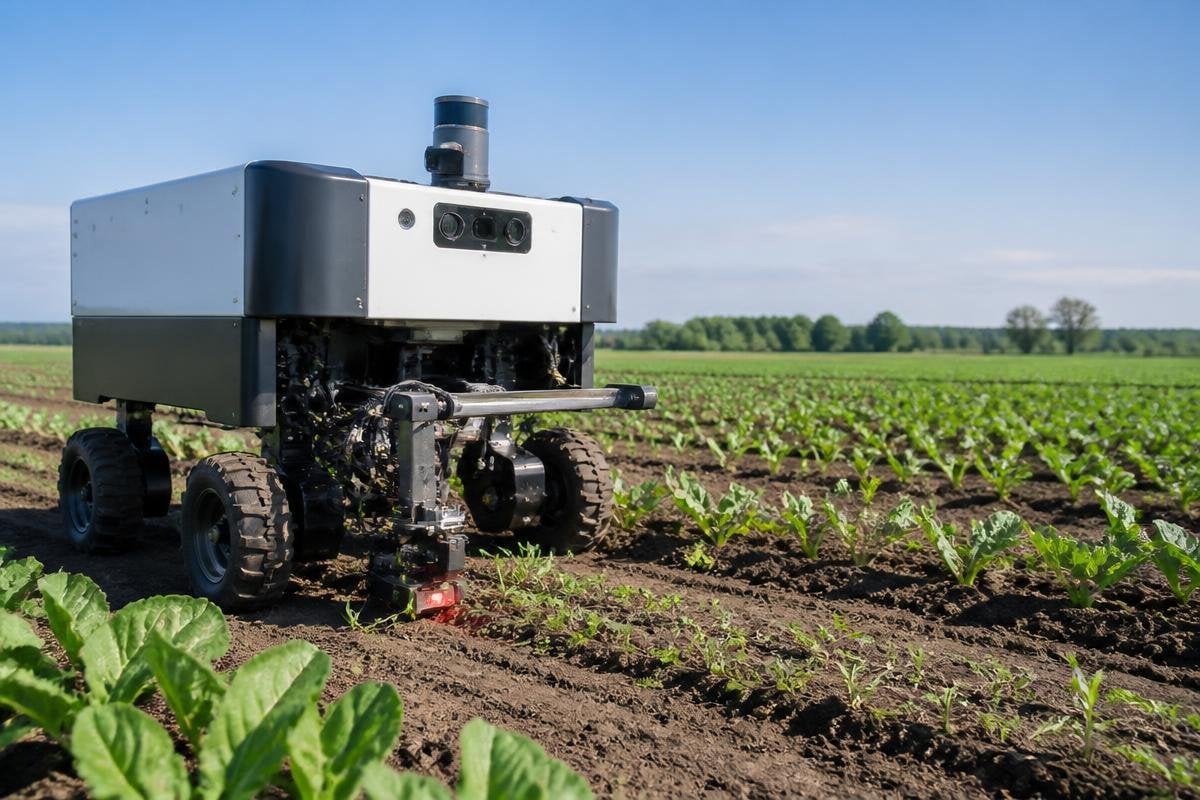
A farm robot can treat one weed without spraying the whole row. That change comes from cameras, position data, and tools that act on a small target. For a grower, the useful question is where the robot can replace a blanket spray and where it still needs human help.
- Spot treatment: Cameras find weeds so spray reaches a smaller area.
- Mechanical control: A blade or hoe can remove weeds without chemicals.
- Better timing: Field data can show where a treatment is needed and where it can wait.
Find the weed before treating it
The first step is a clear view of the crop and the ground. An RGB camera can record color and shape, while a multispectral camera reads light outside the range people see. Software then compares those images with the crop row and marks plants that may be weeds.
That mark guides the next action. A spray nozzle can open for a short burst as the robot passes the weed, or a small tool can cut or disturb the soil near it. The system does not need to cover the full field when it can act on a defined spot.
Accuracy depends on the gap between plants. Dense weeds, dust on the lens, poor light, and crops with a shape close to the weed can lead to wrong calls. A missed weed may grow back, while a wrong spray can damage the crop, so the system needs checks before it works without close supervision.
Three ways to cut chemical use
Spot spraying is the most direct route. The platform carries a tank, pump, camera, and controlled nozzles. Each nozzle can spray only when the software marks a target, which limits chemical use to selected plants or small patches.
Mechanical weeding uses a blade, hoe, brush, or other tool. During the pass, it follows the crop row and keeps the tool near the soil surface. This method avoids a chemical treatment, though it needs enough space between the crop and weed to prevent damage.
Mapping adds another layer of control. A robot can record where weeds appear and store those points with location data from GPS or real-time kinematic GPS, known as RTK-GNSS. The map can guide a later pass or help a farm team treat only the affected areas.
A weed map matters when a field robot uses it to change where and how it sprays. Farm robotics reporting from Robot24.com can help you compare those claims with named machines, test settings, and field results. That evidence leads to the people who still set the task and respond when field conditions change.
Where the system still needs people
A robot needs a clear operating plan. The farm team must set row spacing, safe travel areas, treatment rules, and a response for uncertain images. Those settings change with crop type, growth stage, soil condition, and weather.
Spray hardware also needs care. A blocked nozzle can leave a weed untreated, while a leak can place chemical where it does not belong. The operator should check the tank, pump, hoses, nozzles, cameras, and emergency stop before each field run.
The hardest part may be proving that a lower spray rate still controls weeds across the full season. One clean pass says little about later growth, rain, new weed patches, or plants hidden under the crop leaves.
Field records need to connect each treatment with the weed map and the result seen after it. That record shows whether lower chemical use still controls weeds as the crop grows.
A field decision guide
Before choosing a robot for pesticide reduction, check these points:
- Crop layout: Confirm the robot can fit between rows without touching plants.
- Target size: Set the smallest weed or patch the camera must find.
- Tool choice: Decide where spot spray, cutting, or soil work fits the crop.
- Location data: Check whether standard GPS gives enough position accuracy.
- Human review: Set a rule for pausing when the image match is uncertain.
- Season records: Save maps, treatments, weather, and follow-up checks.
I’d start with one crop block and a clear measure: treated area per hectare, missed weeds, and crop damage. That gives the farm a useful comparison before it sends a robot across every field.
The next step is a field trial that runs through changing light, weather, and crop growth. If the robot can find targets, treat them safely, and prove control after follow-up checks, pesticide reduction becomes a measured farm result rather than a promise.